Chroma Color® Corporation is Proud Supporter of the Rowan-Cabarrus Community College Advanced Technology Center

.         Rowan Cabarrus Chroma Color®

Rowan-Cabarrus Community College Advanced Technology Center located at the North Carolina Research Campus is 55,000-square-foot state-of-the-art, adaptable labs and classrooms designed to meet industry growth for the next 50 years. A large flex lab on the ground floor provides space for industry partners to collaborate and innovate.

Programs at the ATC emphasize robotics, engineering and advanced technology, and the building even features a roving robot in the lobby area to welcome visitors, give directions and answer questions. Programs offered at the allow students to earn degrees, diplomas, industry-recognized certifications, and company-specific process training.

From Chroma Color®’s leadership point of view, it is essential for us to continue to contribute to these local educational programs. As the workplace continues to evolve and adapt, the partnership with Rowan-Cabarrus Community College is one way employers can leverage an excellent resource to stay abreast of and prepared for future trends.

For more information:

https://www.rccc.edu/

https://chromacolors.com/


Understanding Color 101

What is Color?

Color is a phenomenon so rich and complex in scope that it touches all human activity.

It is the attribute of visual sensation or, by extension, an object or light that can be described by such terms as red, green, blue, yellow, white, black, etc.

Color is as common in our environment as the air we breathe, in fact, it is so prevalent that we are not always aware of just how much we depend on it.

The Color Challenge

Color is much more than something physical.  Color is what we see, the result of a physical modification of light by colorants as observed by the human eye and interpreted by the brain.  This is an enormously complicated train of events.

With a basic understanding of color in the broad sense, we can approach some commercial problems involving color.

These problems are concerned with answering such questions as:

  • Does the sample match the one we made last week?
  • Do these two colors match?
  • What pigments do I use to produce a match to the target?
  • What pigments will perform satisfactorily in this process?

Subjective or Objective

  • Traditionally, questions like these and others have only subjective answers, based upon the skills and knowledge of the trained color matcher. As everything evolves, so has the art and science of color technology.
  • Color computers and software are being perfected, and higher quality training is available. Some universities now offer polymer science courses with color matching and processing. In the past, these skills were learned on the job by trial and error.

Color vision in humans is based on the additive color theory. This theory states that all perceivable colors can be made by mixing different amounts of red, green, and blue light, the primary colors of the additive color system. … The three additive primaries are at the center.

Subtractive color mixing is the kind of mixing you get if you illuminate colored filters with white light from behind, as illustrated at above.

The commonly used subtractive primary colors are cyan, magenta, and yellow, and if you overlap all three in effectively equal mixture, all the light is subtracted giving black.

Color The Challenge:

  • It can be complex, elusive, powerful, fickle, and demanding.
  • Our Challenge is to control it, and to achieve consistent quality.
  • It stirs emotions, starts arguments, and sells products.
  • To respond to our customers quickly; producing products in an efficient manner that allows our customer to keep their product costs in line without sacrificing quality or consistency.

Light Source- Consistency is Critical

The color you see is also affected by the type of light source.

  • Artificial lighting comes in a variety of colors:
  • Illuminant A-tungsten, a red/yellow light source.
  • D-65 & Cool White Fluorescent, blue/green light, closest to noonday sun.
  • Normal Incandescent, a very yellow light.

These light sources were designed to bring consistency into color matching, and to accentuate the color of a product on display.

Metamerism – A Phenomenon

A term used in the color industry for the phenomenon exhibited by two surfaces/samples/targets that appear to be the same color under one light source (e.g. Daylight), but which do not match in color when viewed under a different light source (e.g. Incandescent).

Today’s color computer software provides the color matcher with tools to minimize metamerism and arrive at formulations that offer an acceptable match under a variety of lighting conditions.

Guide To Mixing Colors

 Additive Mixing occurs when colored lights are superimposed to achieve a different color.

If the three primary additive colors (red, green, blue) are mixed evenly, white light is achieved. There is no black or gray in additive mixing.  A color television screen is an example of additive mixing.

Subtractive Mixing is the most common type of color mixing.  This occurs when pigments and dyes are mixed to achieve an object color.

If the three primary subtractive colors (Cyan, Magenta, Yellow) are mixed evenly, all light is subtracted, producing black. Opaque objects are examples of subtractive mixing. The plastic industry works in this area.

Colorant Terminology

Because colors can evoke an emotional response, colors are often described in subjective terms such as “warm” or “bold” or “peachy”, which leads to confusion when people who work with color talk to each other.

Subjective Terms Often Used to Describe Color

“Make it Warmer”

“Make it Cooler/Colder”

“Try and make it Peachier”

“It Needs to be Bolder”

“Make it Have More Life”

“Needs to be Creamier”

“Add a Smidgen of Red”

The artist and art professor Albert H. Munsell recognized the need for objective, measurable terminology and published his Munsell Color Chart back in 1905.  In the Munsell system, color is described in terms of three-color coordinates, “Hue”, “Value”, and “Chroma”.

Colorant Terminology…or lack of.

Color is “Hue”

Lightness is “Value”

Saturation is “Chroma”

These three attributes give color its three-dimensional characteristics.

  • Or, to put it another way…

“Hue” is red, yellow, green, blue – the actual color you see.

Apples are red, lemons are yellow, the sky is blue – and that’s how we all perceive color in everyday language.

“Value” is the lightness or darkness of the color; it relates the color to a gray scale between black and white.

“Chroma” is vivid colors and dull colors and everything between.  Chroma can be described as the purity, intensity, or clarity of a color.  An example would be – a lemon has more chroma than a pear.

Color Measurement

The 3 color dimensions introduced by Munsell, can be visualized using an L*a*b* chart, as shown to the right.

Lightness/darkness or “Value” is shown on the L* axis, which varies from 0 (black) to 100 (white).

Color or “Hue” is measured in the plane determined by the a* and b* axes.  Positive values of a* indicate a red color, whereas negative values indicate a green color.  Similarly, positive values of b* indicate yellow, and negative values indicate blue.

Color purity or “Chroma” is measured by the magnitude of a* and b*.  “Candy Apple Red”, for example, has a very large positive a* value.

For more information on conducting a Color 101 training at your company contact: [email protected]

Download this full article as a pdf: Understanding Color 101

About Chroma Color® Corporation

Chroma Color® Corporation is a leading specialty color and additive concentrate supplier that serves a diverse range of markets, including packaging, healthcare, pharmaceutical, wire, cable, consumer products, and others.

Chroma Color®’s strategy includes robust organic growth as well as inorganic growth, that includes eight acquisitions over the past three years.  Chroma’s extensive technical leadership and manufacturing expertise, coupled with its game-changing colorant and light management technologies, have delighted customers for over 50 years.  Chroma Color® Corporation is an Arsenal Capital Partners portfolio company. For more information, please visit: https://chromacolors.com/


Overview of Coloring Plastic Pipe

The pipe market is very competitive. Pipe manufacturers are continually looking for ways to reduce cost while delivering products that meet performance expectations set by customers, codes and standards (ASTM, NSF, NEMA, etc.). Chroma Color® Corporation develops pigments/colors through internal and industry partners related to research, education, technical expertise and trade associations like the Plastic Pipe Institute (PPI) https://plasticpipe.org/index.html allows Chroma Color® to deliver superior and environmental (SUSTAINABILITY HMF) product to the pipe industry.

There are five major markets for a plastic pipe; each has its own unique needs and regulations. These five markets include:

-Building & Construction

-Drainage Pipe

-Energy Piping Systems

-Municipal & Industrial

-Power & Communications


Plastic pipe and conduit color-coded by their end-use application, such as:

-Blue = Potable Water

-White = Irrigation and Water

-Green = Sewer

-Purple (Lavender) = Reclaimed Water

-Gray = Electrical Conduit

-Orange = Telecommunication, conduit

-Yellow = Natural Gas (methane or propane) oil

-Red = Electric Power Lines, Lighting Cable

 Plastic Pipe Resins:

One of the biggest challenges related to coloring a plastic pipe product is accurately matching the desired color in the specific resin. It is critical to establish a partnership with your color & additives supplier early in the development process to meet specific color and the performance attributes.

The colorant supplier must consider the unique resin, color, and performance requirements as they formulate for the application. Each resin is unique (viscosity, melt processing temperatures, natural resin color, and more). Your color supplier can assist with critical application decisions from the onset regarding the carrier resin, pigment systems, stabilizers, and other additives.

The resins primarily used for pipe include:

HDPE: High-Density Polyethylene

MDPE: Medium Density Polyethylene

PEX: Crosslinked Polyethylene

PE-RT: Polyethylene of Raised Temperature

PP-R and PP-RCT: Random Copolymerized Polypropylene

PEX-AL-PEX: Multilayer or Composite PEX Tubing

In general, the features and benefits of the high-performance high-temperature plastic-piping systems include:

  • Ease of installation (Coil Pipe)
  • Corrosion resistance
  • Safety of potable Water
  • Reliable fitting and joining options
  • Lightweight, ease of transportation and handling
  • Proof of long-term reliability with over decades of use around the world (100 year life expectation) with proper manufacturing and installation.

Types of Pipe and Resins

Municipal and Industrial Water Applications

For municipal and industrial applications, high-density polyethylene (HDPE) pipe is recommended. HDPE’s heat-fused joints create a leak-free pipe structure. HDPE pipe is chemical, abrasion, fatigue, seismic, and corrosion-resistant.

Conduit

High-density polyethylene (HDPE) resin is also used for the conduit to protect electrical power and telecommunications cables. It is available in long coil lengths to reduce joints and installation time. HDPE conduit is also available in a variety of sizes, colors, dimensions, and lengths. Typical applications include:

–Telecommunications

-CATV

-Highway lighting

-Underground utilities.

Premise (Riser and Plenum) conduit has specific characteristics and flame retardant ratings for use as nonmetallic raceways in buildings.

Color Selection:

After establishing the resin, your conversation moves to color selection. Typically, your supplier has color sample chips or Pantone color charts to pinpoint the desired color for each plastic product or part.

During this selection process, colors may differ depending on gloss, grain, filler, resin type, light sources, and other factors. Knowing this in advance allows the color supplier to choose high-performance pigments that are more light stable than typical workhorse pigments.

There is also much pressure to eliminate the use of heavy metals (HM) pigments in favor of more environmentally friendly options. You need to ask your color concentrate supplier if the pellets include Heavy Metal Free (HMF)* or Heavy Metal (HM) pigments.

*Chroma Color® Corporation meets ASTM F2160 − 22 requirements that requires the use of HMF pigments and eliminates the selection of HM.

In addition, heavy metal-based heat stabilizers have traditionally been used with HDPE and/or polyethylene pipe. These include Lead and Cadmium Salts. Such environmentally unfriendly chemicals are rapidly being replaced with non-heavy metal stabilizers, such as calcium stearate.

A pipe that uses HMF (Heavy-Metal Free) stabilizers provides the end-user with the confidence of zero toxicity from heavy metals.. These include Lead and Cadmium Salts. Such environmentally unfriendly chemicals are rapidly being replaced with non-heavy metal stabilizers, such as calcium stearate. A pipe that uses HMF (Heavy-Metal Free) stabilizers provides the end-user with the confidence of zero toxicity from heavy metals.

Pipe exposed to Ultra Violet Light needs protection from the damage caused over time. Chroma Color®’s patented G series can have a stabilizer with UV resistant material to provide some protection from UV damage.

Chroma Color®’s patent G2 and G3 also provides a cost-effective solution for solid wall pipe and vibrant co-extrusion skin colors.
ChromaGSeries

BASICS of ChromaGSeries PATENTED G2, G3 COLOR TECHNOLOGY

Highly loaded concentrates have become a cost-effective alternative to standard color products because they require less concentrate to achieve the same results and blend with resin more efficiently.

The patented G2 formulation ingredients enable Chroma Color® to boost loadings of pigments and additives up to twice what was considered feasible in traditional color and additive concentrates.

– Typically, a G2 formulation contains up to about 80% active ingredients, some as high as 85%. For some pipe applications, we can load up to 60% additives.

– A high concentration of color and additives is just one aspect of G2 technology. The technology also allows us to dial in melt flow to enable the processor to produce uniformly colored parts with color use rates as low as half a percent.

Patented G3 reduces cost and eliminates processing headaches. It achieves even more significant improvements through a total system approach. Key attributes and advantages include:

– Used with any resin system except PVC

– It delivers 20% or more increased pigment loading than G2 in Polyethylene & Polypropylene without compromising pigment dispersion and distribution

– G3 offers formulations with 40% of dyes in HIPS, PET, Nylon, Crystal Styrene, and Acrylic.

– It offers formulations with 50% or more pearlescent pigment, nearly doubling the former industry standard of 30%

-Heavy Metal Free

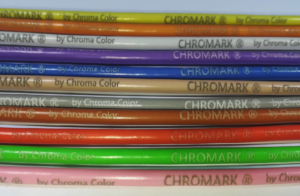
CHROMARK® is Chroma Color®’s laser marking additives to help control marking behavior over a broad class of resins and pigment chemistries. The Chroma Color® team can help you select the right colorant and additive package to ensure you obtain the ideal laser mark for your product at an economical cost-to-color.

With our in-house NIR Laser, we help you optimize the marking behavior and laser settings for various resins, including ABS, PE, PP, LDPE, HDPE, Co-Polyester, PBT, Polysulfone, GPPS, HDPE, Nylon, Acrylic, PVC, Polyacetal, and Polycarbonate. Besides, Chroma’s patented G3 technology can also provide highly loaded concentrates with a laser-marking additive.

Chroma Color® Plastic Pipe Case Studies

Wire and Cable Application:

A manufacturer of electrical wire was looking for a better color concentrate option for their product line. Our wire and cable research team developed a highly loaded PVC concentrate that is producing the following results:

1- Reduction in Let Down Ratio (LDR) with an LDR of 0.5% reduced inventories and upfront cost

  1. The low LDR reduces the number of spark outs (if any) that reduces machine downtime and increases utilization
  2. Black 508/2006 PVC unique formula reduced shear heat to allow increased line speeds on thin gauge products
  3. The unique formula enhances the black appearance on a retail shelf by giving your coiled wire a shine instead of a typical stock black dull appearance.


Radiant Pipe Application:

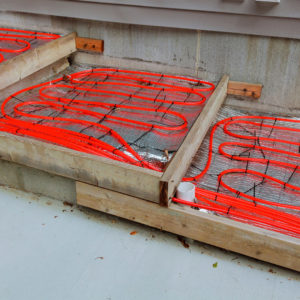
– G2 used for a high-temperature pipe used for a radiant application.

– Co-Extruded outside skin polyethylene raised temperature PERT-PE skin colors to reduce the overall cost of pipe. 3,000-4,000 of an inch thick skin

– Lower Letdown Ratios of .75% Achieved

– Red, Blue and White Colors Available

– UV additives used to prevent fading

– Other applications for this technology include high-temperature for building construction, hot and cold water pipes, and business.

Click Here To Download The Full Article As A PDF 
Chroma Color® Corporation Announces the Acquisition of Color Resource, LLC

 Chroma Color® Color Resources

June 28, 2021-McHenry, IL: Chroma Color® Corporation has acquired Color Resource LLC, a manufacturer of color concentrates for the telecommunications, fiber, building, electronics, and specialty wire markets. Color Resource’s manufacturing plant is located in Leominster, Massachusetts. This acquisition significantly expands Chroma Color® Corporation’s current product offerings in the wire and cable marketplace and other key market segments.

Founded in 2009, Color Resource has provided customers stock and custom color concentrates that meet Munsell, NEMA, RAL, and SAE J-1178 specifications for PVC, PE, PP, and EVA resins. These color concentrates often include additives for UV protection, anti-microbial, flame retardancy, anti-static, or chemical resistance for use in harsh environments.

Chroma Color® President, Howard DeMonte, stated, “We are pleased to now offer our current wire and cable customers with new moisture cure options for emerging markets such as low voltage, automotive, and appliance.  Additionally, Color Resource’s plant in Leominster, Massachusetts, is very close to the Chroma Color®’s facility. This makes the blending of our companies easier on our team members and seamless for our customers.”

This key acquisition of Color Resource brings other technologies and know-how to Chroma Color®, especially for our customers in the wire and cable market. Our entire team is fully prepared and ready to support Color Resource’s customers during this time of transition. We are confident that customers will realize immense benefit as a result of Chroma Color®’s expanded capabilities to support their needs.

Chroma Color®:

Chroma Color® Corporation is a leading specialty color and additive concentrate supplier serving diverse markets, including wire and cable, packaging, healthcare, pharmaceutical, consumer products, and others. Chroma Color®’s growth strategy includes robust organic and inorganic growth through six acquisitions over three years. Chroma’s extensive technical leadership and manufacturing expertise, coupled with its game-changing colorant has delighted customers for more than 50 years. For additional information, please visit www.chromacolors.com.

Color Resource, LLC:

Color Resource manufactures premium quality color concentrates for the wire and cable, profile extrusion, and injection molding industries. All products are RoHS and REACH compliant. Color Resource offers an in-stock full-range line of Munsell and NEMA colors in PVC, PE, and standard EVA color concentrates exhibiting excellent electrical properties. Color Resource’s moisture cure XLPE compounds meet the needs of the low-voltage, automotive, and appliance wire markets.

https://color-resource.com/

Chroma Color® Corporation Introduces NIR Sortable Black Color Concentrate Solution

Chroma Color® NIR Black

Material Recycling Facilities (MRFs) use IR (infrared) and NIR (near infrared) sorting technology to increase yield, improve throughput rates, and increase profitability.  The challenge with this technology is its inability to properly identify and accurately sort black colored plastic products.  Carbon black absorbs the light emitted from the IR devices and prevents the successful identification of the type of plastic. These unsorted black plastic products are rejected and, in most cases, end up in landfills.

Brand owners have published aggressive sustainability goals requiring a quantum leap in the recyclability of plastic articles. It is not acceptable to loose plastic articles to landfill solely because they are black or very dark in color.   Significant resources have been devoted to creating black branded products, and viable practical solutions are required.  Rather than sacrificing the brand’s aesthetic desires, the best option is to maintain brand recognition and replace carbon black with an alternative black coloring technology.

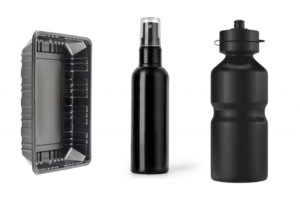
Chroma Color® now offers a solution to this problem.  A carbon black alternative that does not sacrifice brand aesthetics but allows the MRF sorter to accurately and repeatedly identify and sort the plastic article.

Chroma Color®’s NIR sortable black technology is based upon IR reflecting/transparent pigments and proprietary combination of dyes and organic pigments.

This product is referred to as “NIR Sortable Black ” and is available in a variety of resins that include the most common packaging resins; polypropylene, polyethylene, polystyrene, ABS and PET.

Key features of this color system:

Inert, heat stable, non-migratory

Can be used in a variety of polymers

FDA Approved

About Chroma Color®

Chroma Color® Corporation is a technology-leading specialty color and additive masterbatch supplier delivering critical aesthetics, technical innovations, and sustainable solutions to plastics processors and brand owners. Chroma Color®’s growth strategy includes robust organic and inorganic growth, having made six acquisitions over the last three years. Chroma Color®’s extensive technical leadership and manufacturing expertise, coupled with its game-changing colorant and light management technologies, have delighted customers for over 50 years.

Chroma Color® Now Has Concentrates Available For 3D Printing and Additive Manufacturing Applications

Additive Manufacturing Materials

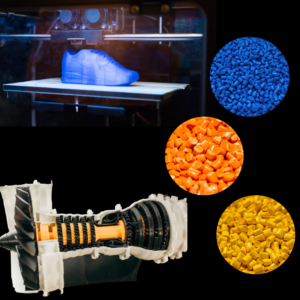
As the market for additive manufacturing and 3D printing grows and applications expand, manufacturers have expressed desires to enhance their capabilities with functional, colorful, and performance characteristics for the variety of resins being used. Chroma Color® can now provide filament and resin suppliers with pelletized concentrates to meet these needs.

Chroma Color® supplies concentrates for most 3D printing resins, including PLA (Polylactic Acid), PETG (Polyethylene Terephthalate Glycol), PET (Polyethylene Terephthalate), ABS (Acrylonitrile Butadiene Styrene), HIPS (High Impact Polystyrene), Nylon, TPU (Thermoplastic Polyurethane) and more.

3D printing customers can count on Chroma Color® to provide required small lots to large production orders in a wide range of standard and custom colors.  For material suppliers looking for unique custom colors, Chroma Color® will access our extensive color library and state-of-the-art labs to develop pelletized concentrates to meet exact specifications.  To learn more, contact us at https://chromacolors.com/contact-us/

About Chroma Color®

Chroma Color® Corporation is a technology-leading specialty color and additive masterbatch supplier delivering critical aesthetics, technical innovations, and sustainable solutions to plastics processors and brand owners. Chroma Color®’s growth strategy includes robust organic and inorganic growth, having made six acquisitions over the last three years. Chroma Color®’s extensive technical leadership and manufacturing expertise, coupled with its game-changing colorant and light management technologies, have delighted customers for over 50 years.

Chroma Color® Corporation Was Issued a Patent for a Pellet Color Concentrate Carrier System Designed to Work in Multiple Clear Plastic Resins

Chroma Color® Transparent

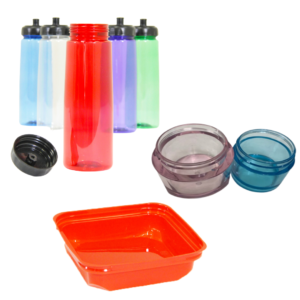
On March 9, 2021, U.S. Patent and Trademark Office issued patent No. 10,941,257 to Chroma Color® Corporation for its versatile color concentrate carrier system designed to color clear resins such as PET, PETG, Tritan, PC, Acrylics and others without affecting their clarity.

“ChromaTransparent concentrate pellet carrier system is also beneficial for coloring tinted parts that are often challenging to color,” stated Jeff Smink, Chroma Color®’s, VP of Technology. “We anticipate continued growth for this technology moving forward into 2021.”

To support that growth, Chroma Color® is installing a Sidel PET stretch blow molder in its Salisbury, NC facility. The technical team will color match for PET bottle customers using its UltraPET® technology which is anchored by Chroma Color®’s newly patented carrier system.

UltraPET® also incorporates Chroma Color®’s patented G3® technology. Both technologies processes at a much lower temperature than conventional PET pellet concentrates. Lower process temperatures enable molders to reduce the heat stress on the pigments and dyes significantly. UltraPET® also offers exceptionally high loading of pigments and dyes, that allows processors significant economic benefits of low usage rates (LDR)

OTHER KEY ATTRIBUTES OF THIS COLOR CONCENTRATE CARRIER SYSTEM INCLUDE:

No screw slippage in opaque PET applicationsIn most cases, the extremely low usage rates also eliminate the need for drying and recrystallization of the colorant common to the use of conventional PET pellet concentrates.These concentrates are resistant to alcohol for applications that require that additional benefit and can be formulated to be compliant with FDA regulations.Another great benefit is a reduction in housekeeping costs compared to the inherent messiness of liquid color.Chroma Color® has also recently launched a new line of UltraPET® expressly designed for use with recycled material, enabling brand owners to achieve their sustainability objectives by using higher PCR PET levels.To learn more about ChromaTransparent download the product info flyer:

ABOUT CHROMA COLOR

Chroma Color® Corporation is a technology-leading specialty color and additive masterbatch supplier delivering critical aesthetics, technical innovations, and sustainable solutions to plastics processors and brand owners. Chroma Color®’s growth strategy includes robust organic and inorganic growth, having made six acquisitions over the last three years. Chroma’s extensive technical leadership and manufacturing expertise, coupled with its game-changing colorant and light management technologies, have delighted customers for over 50 years.

Chroma Color® Corporation Sales & Service Support Now Available For Latin America (LATM) Region

McHenry, IL: Due to the rapid growth of Chroma Color® Corporation’s business in Latin America, Chroma’s executive team is investing in a higher level of regional support having selected the services of long-time industry executive, Juan Rodriquez.

Juan, based in Monterrey, Mexico, has worked in the plastics industry in both the US and Mexico over the past 17 years. In his prior sales and technical positions with PolyOne and Uniform Color Company, he developed a deep knowledge of plastics processing and has considerable experience serving the auto/heavy truck, packaging, consumer products and healthcare industries.

If you are in Latin America and desire local support for your color concentrate projects, please contact us through our form found on our website and we will ensure Juan reaches out to as soon as possible.

About Chroma Color® Corporation

Chroma Color® Corporation is a leading specialty color and additive concentrate supplier of the highest quality and the shortest lead times in the plastics marketplace. The business exceeds $160 million in sales due to solid organic growth and targeted acquisitions. Chroma’s extensive technical leadership and manufacturing expertise coupled with its game-changing colorant technologies have surprised and delighted customers for over 50 years in markets such as: packaging, wire and cable, building & construction, consumer products, medical, healthcare, lawn & garden, durables, sanitation, recreation & leisure, transportation and more.

Chroma Color® Introduces New CHROMARK® Laser Marking Additives and Concentrates

CHROMARK


McHenry, IL: Chroma Color® Corporation announces the launch of CHROMARK® laser marking additives and concentrates to mark plastics extremely fast, contactless, cleanly, precisely, at a low cost and permanent compared to pad printing or adhesive labels.

Laser marking

Depending on the type of additive used, the desired mark, and the color concentrate used, different marking Mark types may be considered. Foaming, engraving, ablation, carbonization, and bleaching are the primary mark types for plastics. For marks that don’t involve material removal, LASER marking additives can produce light marks on dark colored parts, and dark marks on light colored parts primarily by the foaming and carbonization mechanisms. Though many concentrates are inherently mark-able, additives improve the marking depth, contrast, and durability. Careful selection of pigments, stabilizers, and resins can also improve the mark performance.

The team at Chroma Color® Corporation can help you select the right CHROMARK® colorant and additive package to ensure you obtain the ideal laser mark for your product at an economical cost-to-color. With the in-house NIR Laser, the team can optimize the marking behavior and laser settings for a variety of resins including ABS, PE, PP, LDPE, HDPE, Co- Polyester, PBT, Polysulfone, GPPS, HDPE, Nylon, Acrylic, PVC, Polyacetal, and Polycarbonate. In addition, Chroma’s patented G3® technology can also provide highly loaded concentrates with laser marking additives.

About Chroma Color® Corporation

Chroma Color® Corporation is a leading specialty color and additive concentrate supplier of the highest quality and the shortest lead times in the plastics marketplace. The business exceeds $160 million in sales due to solid organic growth and targeted acquisitions. Chroma’s extensive technical leadership and manufacturing expertise coupled with its game-changing colorant technologies have surprised and delighted customers for over 50 years in markets such as: packaging, wire and cable, building & construction, consumer products, medical, healthcare, lawn & garden, durables, sanitation, recreation & leisure, transportation and more.

Chroma Color® Corporation Acquires Polymer Concentrates Inc.

McHenry, IL: February 12, 2019- Chroma Color® Corporation announces today it has acquired Polymer Concentrates Inc., based in Clinton, MA. With this latest acquisition, Chroma Color® continues to grow its manufacturing footprint along with its suite of colorant and additive technologies to better serve existing and prospective customers. Terms of the transaction were not disclosed.

Polymer Concentrates Inc., a privately-held company, develops and manufactures color concentrates for the international plastics industry. Over the past five decades, Polymer Concentrates Inc. has forged deep relationships with a wide range of customers in the automotive, communication technology, wire-cable, housewares, netting, packaging, and other specialty industries.

“We were very excited when we saw the opportunity to add Polymer Concentrates Inc. to the Chroma family,” stated Tom Bolger, CEO, Chroma Color® Corporation. “The company has a solid reputation in the marketplace and its’ facility is very close to our plant in Leominster, MA. Chroma Color® and Polymer Concentrates have complimentary product lines, but distinctly different customer bases that makes this acquisition very attractive allowing us to offer a broader suite of products to the customers of both the legacy Chroma and PCI.”

Howard DeMonte, Chroma President and head of Corporate Development states: “Polymer Concentrates delivers exceptional color technology for nylon and other engineering resins and has several exciting new products in the R&D pipeline. This coupled with their exceptionally talented work force has us excited about our future together.”

“We are pleased Polymer Concentrates Inc. has agreed to join Chroma. This acquisition continues the company’s strategy of growth both through innovation and acquisition of great customer and technology focused businesses.”

About Chroma Color® Corporation

Chroma Color® Corporation is a leading specialty color and additive concentrate supplier of the highest quality and the shortest lead times in the plastics marketplace. The business exceeds $160 million in sales due to solid organic growth and targeted acquisitions. Chroma’s extensive technical and manufacturing expertise coupled with its game-changing colorant technologies have surprised and delighted customers for over 50 years in markets such as: packaging, wire and cable, building & construction, consumer, medical, healthcare, lawn & garden, durables, sanitation, recreation and leisure, transportation and more.