
You should also ask yourself: Is this color concentrate engineered for faster processing and reduced cycle times to ensure throughput without impairing color precision or durability? Does the concentrate’s thermal stability support demanding packaging processes, including thin-wall designs and high-speed extrusion or injection molding? Together, these advantages will help you boost packaging performance, reduce waste, and improve operations.
The Benefits of Switching from Liquid Color to Color Concentrates:
Switching from liquid color to high-performance color concentrate technology offers several important advantages that can significantly improve manufacturing performance and reduce total production costs. High-performance systems provide far more precise colorant delivery, resulting in consistent, repeatable color with minimal variation from batch to batch. Because these technologies meter color directly into the process, they eliminate the mess, storage challenges, and contamination hazards often associated with liquid color. They also reduce cleanup time and simplify changeovers, permitting operators to move between colors more quickly with less downtime. In many cases, you can achieve the same—or better—color strength while using less additive. The combination of accuracy, cleanliness, reduced waste, and lower operating costs makes these systems a strong upgrade over traditional liquid color.
How Color Concentrate Drug Master Files (DMFs) for Medical Plastic Packaging Makes Your Life Easier
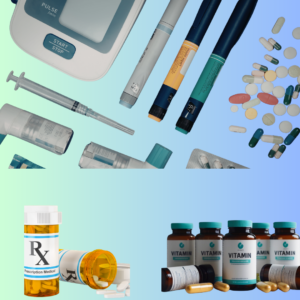
Drug Master Files offer medical packaging companies a substantial regulatory and operational advantage by providing pre-vetted, FDA-reviewed documentation for colorants used in pharmaceutical and healthcare products. This reduces the burden of material qualification, speeds time to market, and simplifies compliance for devices such as syringes, caps, connectors, and diagnostic components. With DMFs in place, you can be confident that your color concentrate is safe, consistent, and traceable—critical factors for your medical-grade packaging that must meet strict performance and regulatory requirements.
A Good Color Concentrate Option for Your Plastic Packaging
Chroma Color’s G3 technology delivers strong value by providing high-efficiency color concentrates that improve processing performance while cutting overall material costs. G3’s advanced dispersion enables rich, uniform color at significantly lower let-down ratios, helping manufacturers use less concentrate without sacrificing quality. Chroma’s patented G3 technology can also provide highly loaded concentrates containing laser-marking additives. The formulation also allows faster cycle times, excellent thermal stability, and cleaner processing, which together reduce waste, improve production efficiency, and improve sustainability across a wide range of plastic packaging applications.
To learn more about G3 and Chroma Color Corporation, visit: chromacolors.com.